
L'autismo e il sistema dei neuroni specchio
Ex falso sequitur quodlibet
DICA - Laboratorio di Bioingegneria Industriale, Dipartimento di Ingegneria Civile e Architettura, Università di Udine
Indirizzo per corrispondenza: bioing@uniud.it
Autism and the mirror neuron system
Key words
Autism spectrum disorders, Motor programming deficit evidence, Mirror neuron, Broken mirror theory
Summary
The large general consent gained by mirror neuron paradigm has led to advocate this neural network in the physiopathology of autism spectrum disorders (ASD). This hypothesis, tough, is based on a controversial neurophysiologic assumption: an inappropriate attribution of an emergent cognitive function to a specific neural population. 'Mirror neuron' could be the name given to the impossibility to reduce action-perception dualism to the unity of consciousness.
Figura 1
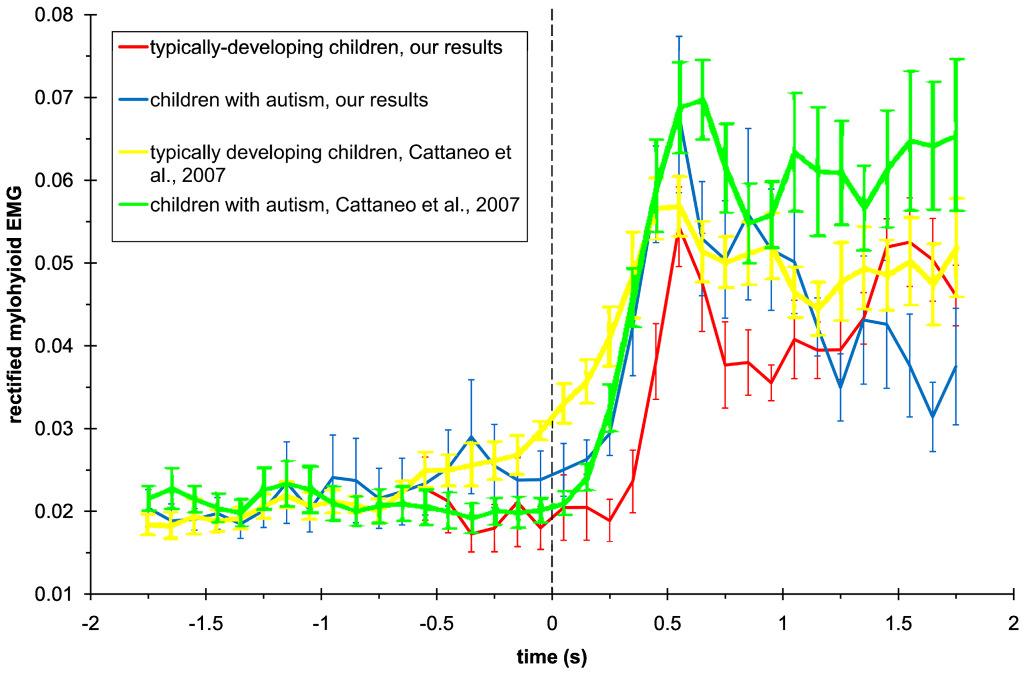
Figura 2
Bibliografia
Vari e vasti sono i campi d'indagine esplorati nel tentativo di raggiungere un'uniforme e condivisa interpretazione della fisiopatologia e dei meccanismi che sottendono i disturbi dello spettro dell'autismo (autism spectrum disorders, ASD), ovviamente con l'obiettivo, un giorno, di poter disporre di mezzi efficaci per il trattamento.
Tra i differenti approcci impiegati per raggiungere un simile risultato, l'indagine psicologica ambisce a distinguere la sorgente della distorsione percettiva che conduce al complesso sintomatico. Una volta distinti differenti sintomi e segni, ricondotti alle diverse aree dello sviluppo coinvolte, si è assegnata a essi una giustificazione in termini cognitivi giungendo a identificare l'assenza di empatia1-4, ossia la capacità di stabilire un contatto emotivo con gli altri, come la principale responsabile degli atteggiamenti che contraddistinguono i disturbi dello spettro autistico. Dai primi resoconti di un deficit dell'abilità imitativa evidenziata da Rogers e Pennington nei primi anni '905,6 si giunse a formulare l'ipotesi di una carenza, o isolamento, emozionale in questi individui tale da determinare l'incapacità di attuare un processo mentale di immedesimazione, astrazione necessaria per poter consentire un atto cognitivo complesso come quello dell'emulazione cosciente. In sostanza, stando a questa interpretazione, i bambini autistici non sarebbero in grado di imitare in quanto recepiscono come alieno chi dovrebbero imitare, non essendo in grado di stabilire con questo un contatto emotivo. A tal proposito va precisato che l'empatia stessa potrebbe essere attenuata in conseguenza dell'incompiuta e deficitaria formazione della 'teoria della mente' nei soggetti autistici (TOM)7-9. Con tale concetto si designa la capacità più ampia di un individuo di costruirsi immagini meta-rappresentazionali dei processi cognitivi altrui partendo dagli stessi propri, ossia individuare nell'altro in una determinata condizione lo stesso ordine e funzionamento dei modelli cognitivi ai quali il soggetto stesso ricorre se posto nella medesima situazione.
La rappresentazione 'embodied' delle azioni tratteggiata dalla teoria del sistema dei neuroni specchio (Mirror Neuron System, MNS)10 richiama da vicino un simile meccanismo psicologico che consente, nell'uniformità dei processi cognitivi, l'immedesimazione con gli altri (ossia l'empatia) attraverso la mappatura diretta tra l'azione osservata e quella eseguita dal soggetto stesso (direct matching hypothesis), a patto che naturalmente sia preservata l'integrità della programmazione motoria11. Da ciò emerge la proprietà cognitiva di distinzione del fine di ogni singola azione motoria sin dai primi atti del suo svolgimento. In tale ottica sia quei sintomi riguardanti la sfera delle interazioni sociali (la risposta alla mimica facciale, la prossemica, la fissazione con lo sguardo) sia quelli come il ritardo ad apprendere il linguaggio o la difficoltà a cogliere il punto di vista di chi sta parlando, che coinvolgono la sfera della comunicazione verbale, potrebbero dunque sottendere un simile, se non lo stesso, difetto cognitivo.
Questa idea, già paventata da psichiatri e psicologi tempo addietro, ha guadagnato maggior attenzione e consistenza da quando i neuroni specchio sono stati descritti. Questi, infatti, per le proprietà a essi attribuite, dovrebbero rappresentare il trait d'union tra la dimensione personale e quella interpersonale, consentendo il riconoscimento dell'altro come realtà non aliena ma simile nelle forme di percezione-azione: proprio ciò che appare deficitario in soggetti con ASD. Per la prima volta, dunque, a teorie psicologiche suffragate solo da esperimenti comportamentali hanno potuto essere affiancate 'inoppugnabili' ricerche neurofisiologiche propense a spiegare l'abilità imitativa dell'uomo, così come la formazione della teoria della mente, l'empatia e il linguaggio.
Pertanto, l'ammissibilità ancora dibattuta dell'esistenza di un sistema mirror nel cervello umano12-15 precede l'ipotesi che un non corretto funzionamento di questo sistema possa essere responsabile degli aspetti più caratteristici dei disturbi dello spettro dell'autismo. In ultima analisi, dunque, mirror e autismo costituiscono una congiunzione logica soggetta al principio 'ex falso sequitur quodlibet'.
Recentemente, proprio un disordine di organizzazione del MNS (che potrebbe coinvolgere tanto la materia grigia quanto quella bianca) è stato sondato da Oberman16 come responsabile in prima battuta del quadro sintomatologico, tanto da aver coniato per questa l'immaginifico appellativo di 'broken mirror theory'. Il nodo su cui verte una simile riflessione è che tra soggetti caratterizzati da un normale sviluppo cognitivo e bambini autistici debba esistere una differente capacità nell'organizzazione delle catene di atti motori. Simile evenienza è stata poi descritta confrontando l'esecuzione di un'azione coordinata come quella di afferrare del cibo e portarlo alla bocca in questi due distinti gruppi17. In breve, l'esperimento consisteva nel monitorare il gesto di afferrare del cibo (pulsante di avvio e piattaforma sensibile al tocco, su cui veniva collocato il cibo) e confrontarlo con le tempistiche di attivazione del muscolo miloioideo, principale attuatore dell'apertura della bocca (registrato con metodica elettromiografica). Per il gruppo di bambini autistici si era osservata un'eccitazione del muscolo in ritardo rispetto al momento in cui il cibo veniva raggiunto con la mano; la spiegazione offerta in termini neuro-cognitivi suggeriva che la disgregazione delle catene cinematiche rendesse conto della difficoltà di distinguere il fine, ossia l'ultimo atto delle catene motorie, nei soggetti affetti da ASD.
Tuttavia, gli stessi esperimenti riproposti hanno fornito risultati diametralmente opposti18, suggerendo l'evenienza che l'approccio sperimentale impiegato non abbia tenuto conto di una serie di aspetti critici messi in evidenza in Figura 1.
Si osservi innanzitutto come il grafico riporti i risultati dei due gruppi di soggetti autistici all'interno del range di normalità demarcato dai risultati dei due gruppi di individui con normale sviluppo cognitivo.
Per interpretare una simile prova, bisogna prendere atto che le azioni motorie sono selezionate e affinate secondo criteri di economia energetica caratterizzate da precise variabili cinematiche19. Si può intuitivamente ritenere che l'istante di apertura della bocca sia necessariamente legato alla rapidità di esecuzione dell'azione motoria del sistema mano-braccio. In tal senso, vertendo l'ottimizzazione del movimento principalmente su coordinate spazio-temporali, sarebbe lecito supporre che l'attivazione del muscolo mieloioideo, nel momento in cui si adempie un compito motorio simile a quello descritto nell'esperimento, debba necessariamente anticipare la propria azione attraverso un modello predittivo che gestisca il flusso di informazioni somatosensitive, intrecciando gli schemi dei due atti motori compresi nell'azione. Simile considerazione obbliga necessariamente a rapportare l'esecuzione del gesto a quelle che sono le sue variabili cinematiche per assegnare valore ai distinti pattern riscontrati all'elettromiografia. Questa considerazione rende immediatamente conto della discordanza tra quanto descritto da Cattaneo e coll.17 e quanto da noi rilevato alla luce della sottostima nel modello sperimentale dei parametri cinetici.
A riprova di ciò, eseguendo un esperimento analogo su soggetti sani in cui il target sia collocato di volta in volta a distanze inferiori o superiori allo spazio esplorabile dal sistema mano-braccio è identificabile la stretta dipendenza che intercorre tra questo parametro e la tempistica di apertura della bocca18.
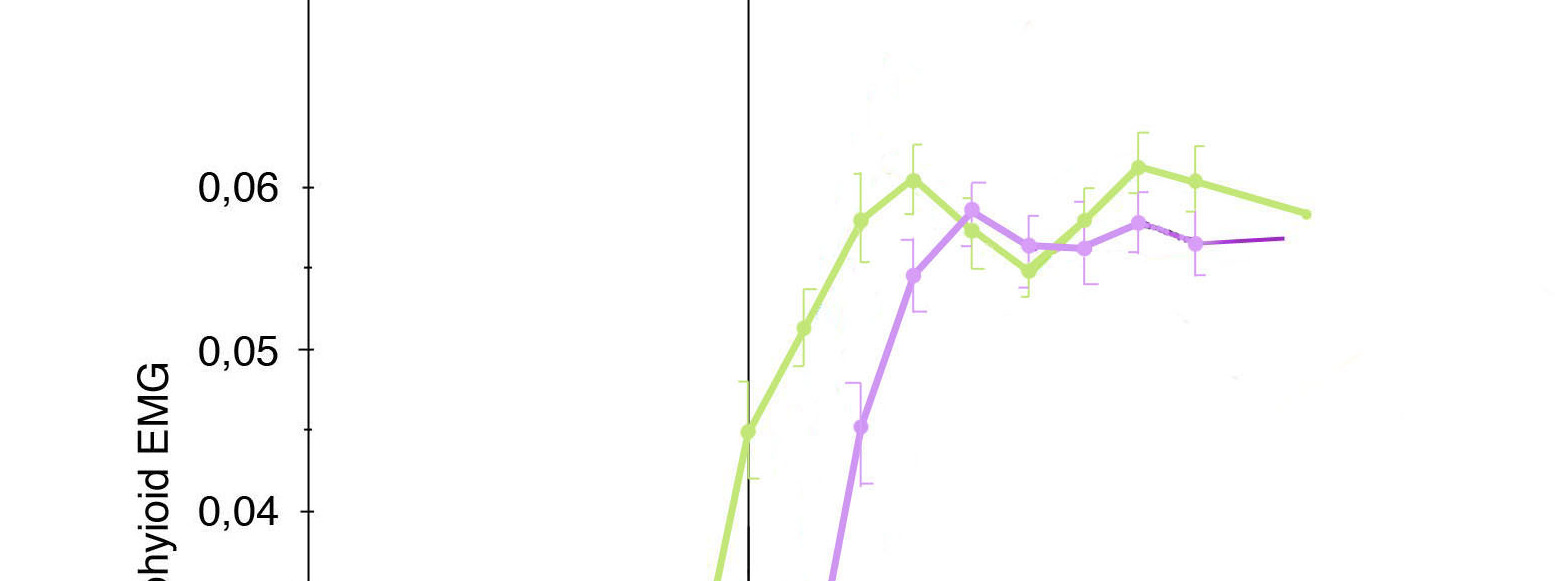
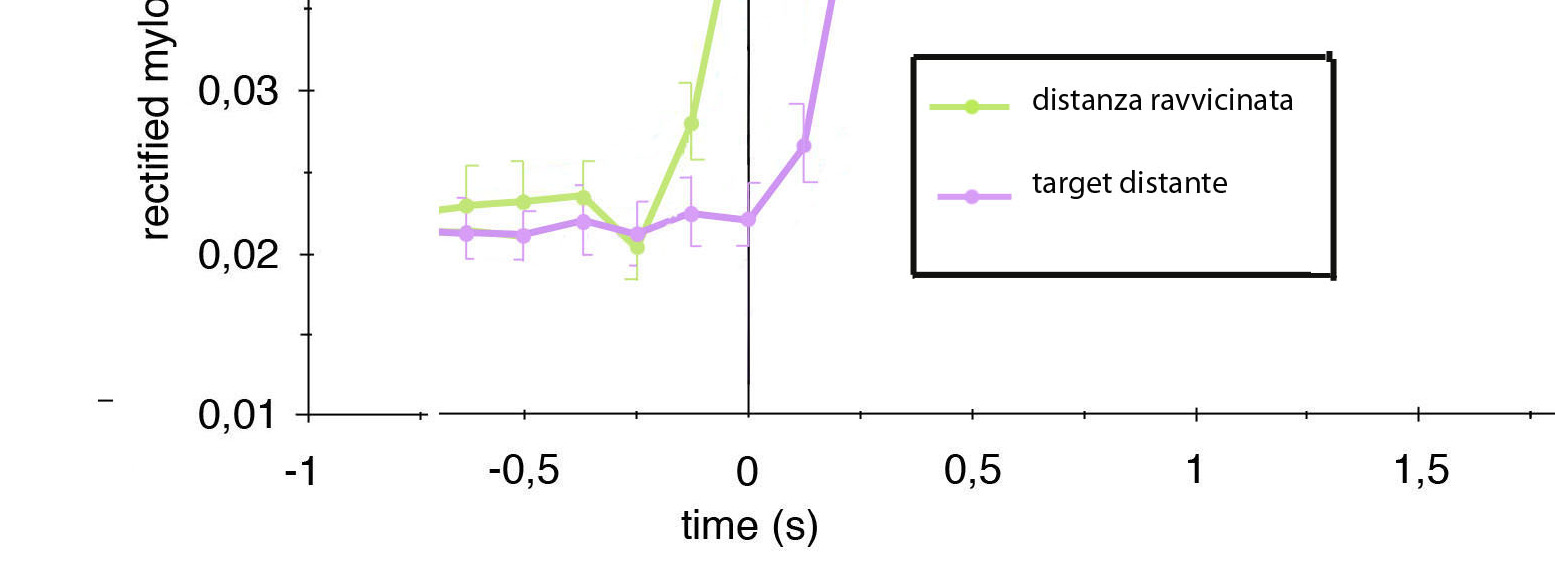
Figura 2. Le due curve rappresentano la media dei risultati di 60 prove eseguite su un gruppo di bambini con normale sviluppo cognitivo. Il 'bersaglio' viene collocato di volta in volta a una distanza normalizzata per la lunghezza del braccio del soggetto inferiore o superiore a quella dello spazio esplorabile dal sistema mano-braccio. Si noti che l'apertura della bocca avviene in ritardo (curva viola, a destra) quando il cibo viene collocato a una distanza aumentata. L'istante 0 indica il momento in cui la mano del soggetto raggiunge il cibo.
Dall'analisi delle curve che rappresentano la dinamica di apertura della bocca (Figura 2), considerato come istante 0 il raggiungimento dell'obiettivo (criterio di sincronizzazione di tutte le prove), appare evidente che il movimento di apertura della bocca si abbia con un maggiore ritardo, nell'ordine dei 150 ms quando il target viene presentato a una distanza aumentata. Ciò porta immediatamente a decretare come impropria l'assunzione che l'attivazione del muscolo miloioideo possa rappresentare l'espressione di una cognizione del fine dell'azione motoria innescata, su cui tutte le riflessioni di Cattaneo e coll. implicitamente si basano. Non si può certamente ritenere che il 'goal', inteso come conclusione dell'azione motoria innescata, possa in alcun modo dipendere dalla distanza dall'obiettivo. Se tale assunzione fosse valida, il grafico precedente dimostrerebbe che in un soggetto sano lo scopo dell'azione già avviata si costituirebbe in fieri e la sua comparsa parrebbe indiscutibilmente legata alla distanza del soggetto dall'obiettivo. Conclusione, questa, insostenibile.
Risulta altreì più ragionevole ritenere che un simile parametro venga assunto per adattare la strategia motoria subordinata al raggiungimento dello scopo già prefigurato. L'apertura della bocca, conformemente a quanto ipotizzato e come dimostrato in quest'ultima prova, è diretta espressione delle caratteristiche cinematiche del gesto, e un parametro come la distanza dal target (ampiamente trascurato nei precedenti esperimenti descritti), che direttamente condiziona le variabili associate all'esecuzione del gesto (impulso, accelerazione massima e velocità massima in primis), risulta essere decisivo e centrale nel determinare il tempismo con cui si attiva la muscolatura (genioioideo, miloioideo e digastrico) che presiede all'apertura della bocca.
In conclusione, alla luce di quanto emerso dalle rilevazioni da noi eseguite, si può affermare con certezza che un modello sperimentale come quello a cui sino ad ora si è ricorsi per sondare l'efficienza della programmazione motoria nei bambini autistici, come causa della sintomatologia centrale di questa sindrome, presenta profonde lacune metodologiche che necessariamente discreditano le conclusioni basate su risultati sperimentali qui apertamente messi in discussione. Se da un lato emerge chiaramente che le caratteristiche cinematiche, grandezze fisiche opportunamente quantificabili, dell'esecuzione del gesto non sono state sino ad ora appropriatamente tenute in considerazione nel disegno delle prove sperimentali esaminate, dall'altro appare ragionevole e auspicabile che a una rigorosa valutazione di queste si debba ricorrere qualora questa ipotesi, per molti versi suggestiva, voglia essere seriamente investigata. A tal proposito appare evidente che un deficit in una simile abilità di organizzazione di catene motorie può essere riscontrato proprio valutando la plasticità di adattamento degli schemi motori al modificarsi di quelle variabili su cui il sistema effettore deve basarsi per determinare e organizzare traiettorie efficaci.
In ultima analisi, appare dunque necessaria la strutturazione di nuove batterie di test in cui la versatilità di pianificazione e l'abilità di esecuzione di movimenti finalizzati 'goal oriented' vengano messe alla prova ricorrendo a condizionamenti ambientali esterni posti ad uopo dallo sperimentatore.
Si ritiene inoltre auspicabile un comune criterio di reclutamento dei candidati a questi test, in modo che sia poi possibile una comparazione delle evidenze su scala più ampia. I limiti comunicativi che tali soggetti riscontrano, o, vista dall'altro lato, che noi riscontriamo nel rapportarci a loro, rendono tuttavia remota la possibilità che anche individui colpiti da sintomatologia più severa e maggiormente caratteristica possano prendervi parte.
Come chiaramente emerso dalla nostra esperienza, inoltre, enorme cura andrà posta nel ridurre al minimo l'impatto delle condizioni al contorno dell'esperimento, visto il peso non trascurabile che esse rivestono nel determinare il risultato finale anche su soggetti sani. Qualora poi un tale deficit venisse riscontrato, l'attribuzione di questo a una particolare area o popolazione neuronale, in virtù della complessità e integrazione organizzativa del sistema motorio, e delle molteplici anomalie morfo-strutturali identificate in aree concorrenti alla pianificazione-esecuzione motoria in soggetti ASD da più Autori20-25, appare evidente essere una forzatura, ancor più considerando quali e quanti siano i dubbi che avvolgono il modello dei neuroni specchio26.
In conclusione, l'interessamento del MNS nelle sindromi dello spettro autistico rimane tuttora da dimostrare. In tal modo si ritiene di aver fugato la possibile distorsione logica operata da quanti a riprova dell'esistenza di un simile network nell'uomo ricorrano all'esemplificazione dell'autismo come dimostrazione di un mancato funzionamento dello stesso.
Bibliografia
1. Baron-Cohen S, Leslie AM, Frith U. Does the autistic child have a 'theory of mind'? Cognition 1985;21:37-46.
2. Baron-Cohen S, Ring HA, Wheelwright S, et al. Social intelligence in the normal and autistic brain: an fMRI study. Eur J Neurosci 1999;11:1891-8.
3. Baron-Cohen S, Jolliffe T, Mortimore C, Robertson M. Another advanced test of theory of mind: evidence from very high functioning adults with autism or asperger syndrome. J Child Psychol Psychiatry 2002;38:813-22.
4. Baron-Cohen S, Golan O, Ashwin E. Can emotion recognition be taught to children with autism spectrum conditions? Philos Trans R Soc Lond B Biol Sci 2009;364:3567-74.
5. McEvoy RE, Rogers SJ, Pennington BF. Executive function and social communication deficits in young autistic children. J Child Psychol Psychiatry 1993;34:563-78.
6. Rogers SJ, Bennetto L, McEvoy R, Pennington BF. Imitation and pantomime in high-functioning adolescents with autism spectrum disorders. Child Dev 1996;67:2060-73.
7. Lind SE, Bowler DM. Language and theory of mind in autism spectrum disorder: the relationship between complement syntax and false belief task performance. J Autism Dev Disord 2009;39:929-37.
8. Lind SE, Bowler DM. Delayed self-recognition in children with autism spectrum disorder. J Autism Dev Disord 2009;39:643-50.
9. Brne M, Brne-Cohrs U. Theory of mind-evolution, ontogeny, brain mechanisms and psychopathology.Neurosci Biobehav Rev 2006;30:437-55.
10. Gallese V.Intentional attunement: a neurophysiological perspective on social cognition and its disruption in autism.Brain Res 2006;1079:15-24
11. Iacoboni M, Woods RP, Brass M, Bekkering. H, Mazziotta JC, Rizzolatti G. Cortical mechanisms of human imitation. Science 1999;286:2526-8.
12. Hickok G. Eight problems for the mirror neuron theory of action understanding in monkeys and humans. J Cogn Neurosci 2009;21:1229-43.
13. Dinstein I, Hasson U, Rubin N, Heeger DJ. Brain areas selective for both observed and executed movements. J Neurophysiol 2007;98:1415-27.
14. Pascolo PB, Budai R. Neuroni mirror nell'area F5 della corteccia cerebrale della scimmia: c'è stata evidenza sperimentale? E nell'uomo? New Magazine Edizioni. Rivista Medica. 2008;60.
15. Pascolo PB, Budai R, Rossi R. Critical review of the research leading to the mirror neuron paradigm - biomed 2010. Biomed Sci Instrum 2010;46:422-7.
16. Oberman LM, Ramachandran VS. The simulating social mind: the role of the mirror neuron system and simulation in the social and communicativedeficits of autism spectrum disorders.Psychol Bull 2007;133:310-27.
17. Cattaneo L, Fabbri-Destro M, Boria S, et al. Impairment of actions chains in autism and its possible role in intention understanding. Proc Natl Acad Sci USA 2007;104:17825-30.
18. Pascolo PB, Ragogna P, Cremaschi S, et al. Autism and motor acts: experimental analysis on mylohyoid muscle emg recordingsduring grasping-to-eat action - biomed 2010. Biomed Sci Instrum 2010;46:178-83.
19. Nelson WL. Physical principles for economies of skilled movements. Biol Cybern 1983;46:135-47.
20. Courchesne E, Carper R, Akshoomoff N. Evidence of brain overgrowth in the first year of life in autism. JAMA 2003;290:337-44.
21. Courchesne E, Karns CM, Davis HR, et al. Unusual brain growth patterns in early life in patients with autistic disorder: an MRI study. Neurology 2001;57:245-54.
22. Hashimoto T, Tayama M, Murakawa K, et al. Development of the brainstem and cerebellum in autistic patients. J Autism Dev Disord 1995;25:1-18.
23. Keller TA, Kana RK, Just MA. A developmental study of the structural integrity of white matter in autism. Neuroreport 2007;18:23-7.
24. Waiter GD, Williams JH, Murray AD, Gilchrist A, Perrett DI, Whiten A. Structural white matter deficits in high-functioning individuals with autistic spectrum disorder: a voxel-based investigation. Neuroimage 2005;24:455-61.
25. Zilbovicius M, Garreau B, Samson Y, et al. Delayed maturation of the frontal cortex in childhood autism. Am J Psychiatry 1995;152:248-52.
26. Fan YT, Decety J, Yang CY, Liu JL, Cheng Y. Unbroken mirror neurons in autism spectrum disorders. J Child Psychol Psychiatry 2010;51:981-8.